


Key Takeaways
- 316L marine-grade steel contains molybdenum - this key ingredient stops saltwater from eating away at your watch case
- Built to handle 300m diving depths - the steel is strong enough to withstand extreme underwater pressure without bending
- Won't rust or corrode in seawater - unlike cheaper stainless steel, 316L stays pristine even after years of saltwater diving
- Lasts 20+ years with minimal care - just rinse after diving and your Alpha watch case will outlast almost everything else
- Used by professional divers worldwide - commercial divers, military units, and dive instructors trust 316L for daily underwater work
Why NITE Alpha Watches Use 316L Marine-Grade Steel
When we set out to build the Alpha and Alpha Z, the material choice wasn't complicated. Professional divers need watch cases that survive saltwater, handle pressure at depth, and last for decades without corroding. That requirement pointed us straight to 316L marine-grade stainless steel.
It's not the cheapest option. But we learned from supplying the MX10 to UK Special Forces - when professionals trust your equipment in operational conditions, you don't cut corners on materials. We apply those same standards to all of our watches.
What Makes 316L Marine-Grade Steel Different?
You've probably seen "stainless steel" listed on every dive watch you've looked at. But here's what matters: not all stainless steel performs the same underwater.
The material we use contains molybdenum, about 2 to 3% of the total composition. This element stops saltwater from breaking down the protective layer that prevents corrosion. Standard stainless steel lacks it entirely, which means chloride in seawater attacks the case over time. You'll see pitting, rust spots, and eventually structural failure.
The "L" designation means low carbon content. Technically speaking, this prevents weak spots from forming during manufacturing, keeping the case stronger throughout its life.
For serious underwater work, this type of steel is baseline. Not premium, not optional - baseline.

Why Saltwater Destroys Regular Watch Cases
Seawater contains about 3.5% salt. Doesn't sound like much, but it's enough to wreck most metals over time. The chloride breaks through protective layers on standard stainless steel, causing pitting that spreads and compromises the entire case.
Molybdenum stops this process. It keeps the protective layer stable, preventing chloride damage. Without it, you get corrosion. With it, your case stays protected even after hundreds of dives in marine environments.
Standard 304 stainless (the kind you'll find in kitchen sinks and cheaper watches) lacks this element entirely. Handles occasional water exposure fine, but corrodes under regular ocean diving. For professional use, it simply doesn't work.
Think about dive instructors in tropical resorts. Multiple dives daily, year-round. Or military divers training in the North Sea with constant salt exposure and impacts against equipment. Even swimming pools create problems - chlorine is brutal on metals. These environments demand materials that can handle continuous chemical exposure without breaking down.
From our experience, this is why NITE's Alpha collection stays looking new after years of hard use. The steel handles marine environments at a molecular level. Actually, when UK Special Forces selected our MX10 field watch for operations, equipment reliability under extreme conditions wasn't negotiable - we apply the same material standards to our dive watch range.
316L Steel Strength for 300m Dive Ratings
At 300 metres deep, water pressure is about 30 times normal atmospheric pressure. Like having a 3-ton weight pressing on every square inch of your watch. The material needs serious tensile strength to handle that without bending or breaking.
But diving isn't just about depth.
Commercial divers bang watches against rocks, coral, equipment. The case absorbs these impacts without cracking. Then there's pressure cycling - every dive stresses the case and seals. Over thousands of dives, the material maintains structural integrity. Field proven durability, not laboratory theory.
The low carbon content prevents microscopic weak spots from forming during manufacturing. Crucial because it ensures consistent strength throughout with no hidden vulnerabilities.
When we rated the Alpha and Alpha Z at 300m, those numbers reflect what the material actually delivers under pressure. Our dive watch construction meets the highest possible standards to be able to deliver both pressure resistance and corrosion protection for professional use.

Why We Chose This Material for Alpha Dive Watches
We could have used cheaper 304 stainless. Most buyers wouldn't spot the difference initially. But after a season of ocean diving, they'd see pitting and corrosion starting to appear. Not acceptable when you're building equipment for professionals who depend on it.
Our military heritage means something. When the MX10 field watch was supplied to UK Special Forces, it wasn't for show - it was because the equipment had to work in operational conditions. We learned what material reliability means in demanding environments. Those same standards apply to our Alpha dive watches.
Right, so here's what we've found: commercial divers, military personnel, and dive instructors have reported their Alpha watches staying pristine after years of hard use in seawater. That's what proper materials deliver when they're operationally tested.
The Alpha Z series houses a Swiss Ronda automatic movement. You don't put precision internals in a case that might corrode and compromise the seals. The case protects that movement for decades.
In practice, we build equipment based on actual underwater requirements, not production costs or what's trending in the market.
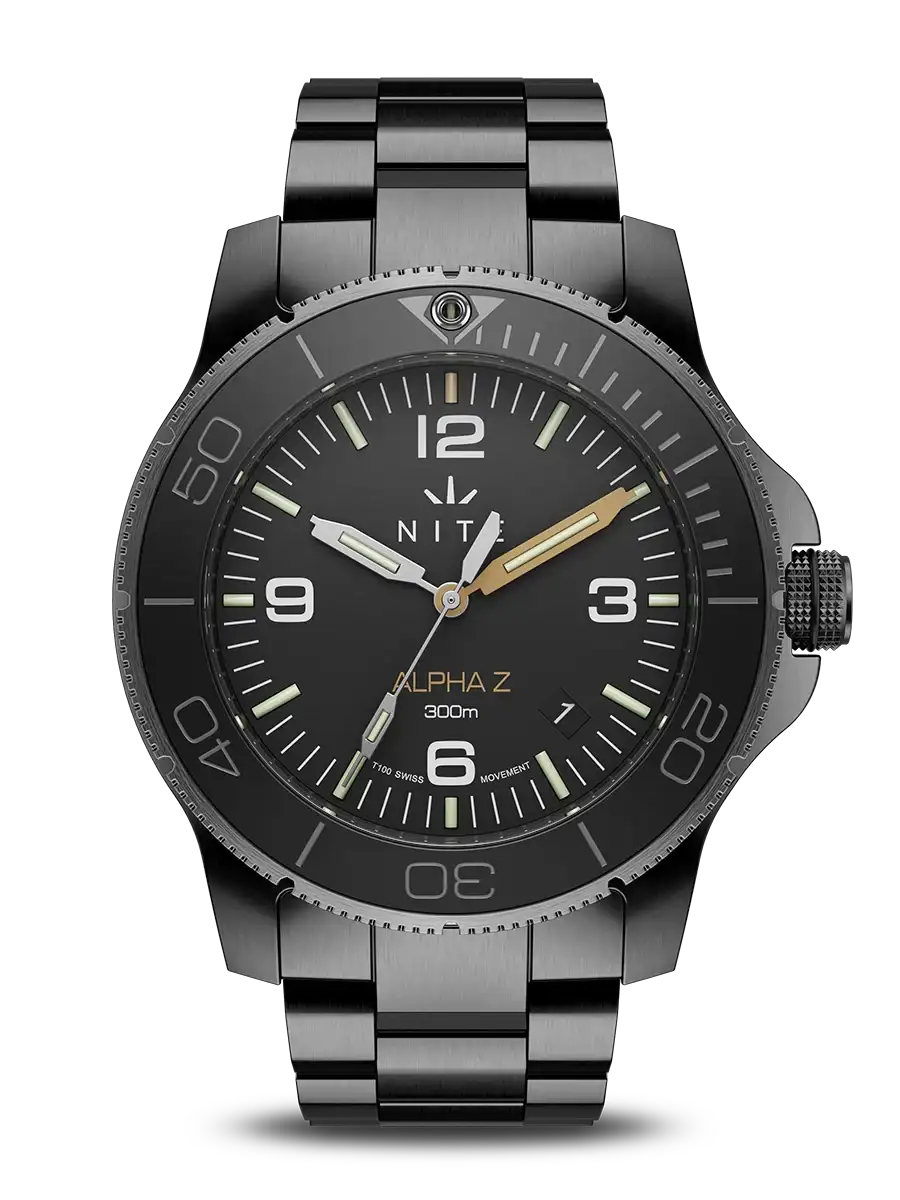
Watch Cases That Last Decades
Cases maintain their appearance after years of ocean diving. Professional divers report them looking virtually new after five years - minor scratches from use, but zero corrosion.
At ten years, structure stays perfect. No rust, no pitting.
After twenty years, the case outlasts tritium tubes (which glow for as long as 20+ years). Maintenance is minimal: rinse with fresh water after diving, occasional soap and water wash. The material handles corrosion protection without special coatings.
A watch built this way lasts decades, not seasons. That's the difference between professional equipment and disposable accessories.
The Real Difference: 316L vs 304 Stainless Steel
Standard 304 stainless (what you'll find in kitchen sinks and consumer products) works fine for general water resistance. Cheaper to manufacture, handles everyday exposure reasonably well.
But here's the critical difference: 304 lacks molybdenum. Without it, the protective layer breaks down when exposed to seawater. Pitting starts after sustained exposure. For occasional water contact, might work. For actual diving? Fails.
The material we use costs more. Raw materials are more expensive, quality control is stricter. But for any watch that will see real saltwater use, the difference matters significantly. We're not talking about slight improvements - it's the difference between a case that stays intact for decades versus one that corrodes within years.
We should mention: some manufacturers use 304 and add protective coatings. Coatings scratch and wear off. Once damaged, the steel underneath corrodes. Marine-grade doesn't need coatings because the corrosion resistance is built into the material itself. For serious underwater work, it's the only sensible choice.
Who Actually Needs Marine-Grade Steel Dive Watches?
Commercial divers working daily underwater. Their watches see more seawater in a month than recreational divers experience in years.
Military divers operating in extreme conditions can't accept gear failure. UK Special Forces training puts watches through scenarios where timing failure could compromise missions. When lives depend on accurate underwater timing, material choice isn't optional.
Maritime professionals - sailing instructors, lifeguards, coastal workers - face constant salt spray. Their watches stay wet throughout working hours.
For serious recreational divers doing technical or deep dives, reliable timing equipment matters. When you're planning decompression stops at depth, you need complete trust in your equipment.
For all these users, marine-grade materials are baseline requirements, not premium features.
Engineering Over Marketing
Most dive watch brands just say "stainless steel cases" without specifying which type. We use marine-grade because our watches demand the corrosion resistance that only molybdenum-bearing steel provides for serious saltwater work.
This isn't marketing language - it's materials science.
As an independent UK manufacturer, our Special Forces heritage taught us that equipment must perform when conditions are harsh. That principle applies to field watches and dive watches equally. Come to think of it, that's probably why we're still independent - we build what works, not what's easiest to sell.
Material selection reflects what actually works underwater, not what's trendy or cheap to produce. When professionals trust their equipment in demanding conditions, the choice has to be right from day one. That's why every Alpha and Alpha Z features 316L marine-grade steel construction.
Frequently Asked Questions
What makes 316L steel "marine-grade"?
The 2 to 3% molybdenum content stops seawater from corroding the material. Regular stainless doesn't have molybdenum, so it breaks down when exposed to salt. Marine-grade designation means it's built specifically to handle ocean environments that destroy standard steel. This makes it the preferred material for serious diving applications.
Will 316L stainless steel rust or corrode in saltwater?
It forms a protective chromium oxide layer that prevents rust. In seawater, the molybdenum keeps this layer stable against chloride attack. With basic maintenance (rinsing after diving), cases stay corrosion-free for decades. You don't need special coatings or treatments because the resistance is inherent to the alloy structure.
Why does the Alpha need 316L for 300m water resistance?
The 300m rating needs materials that can handle extreme pressure without bending whilst also resisting saltwater corrosion. This steel provides both the tensile strength for structural integrity and the molybdenum for corrosion resistance. You need both properties because strength alone isn't sufficient if the case corrodes over time from ocean exposure.
How long will a 316L case last?
With proper care, cases last 25 to 30+ years of regular diving. The material outlasts tritium tubes (which glow for 20+ years) and maintains structural integrity through thousands of pressure cycles. Working divers report Alpha watches staying pristine after years of daily use in seawater, proving the long-term durability of this construction.


