


Key Takeaways
- Silence matters more than specs. A hunting or shooting watch needs no alarm, no notification buzz and no screen light, since any one of those can end a UK stalk or a sit in a US tree stand before it starts.
- Tritium illumination reads in the dark without a light signature. Unlike a smartwatch screen, it's passive and constant, so checking the time at dawn doesn't mean a burst of light visible across open ground or inside a blind.
- Legal shooting hours make timing a real skill, not a formality. UK legal light and the US half-hour rule work on the same principle, but the exact margin differs, and getting it right shapes the whole day.
- A full hunting season is hard on kit, wherever you are. Persistent rain, mud, cold and repeated ground contact call for a case and strap that clean up fast and don't degrade.
- Recoil is a genuine consideration for movement reliability. Repeated shotgun recoil and sharper rifle recoil test a watch's internals in different ways, and a solid quartz movement handles both.
- The best watch for hunting, in the UK or the US, is usually the plainest one. No GPS, no vibration, no button to press. Just a reliable analogue watch built for field use.
What a Hunting or Shooting Watch Needs to Do
Stalking, driven shooting and a quiet morning in a tree stand all run on time. Not glamorous. But true.
Knowing when legal light starts matters. So does knowing how long you've got on a high seat, or when the next drive begins, or how long until you can climb down. That's a working requirement.
We don't build for gadgets here. A hunting or shooting watch has no GPS route tracking, no heart rate monitor, no step count and no notification alerts. None of that helps a hunter who already knows the ground.
What it does need:
- Silent operation, no alarms or acknowledgement beeps
- Controlled, non-disruptive low-light readability
- A non-reflective finish
- Durability across a full season outdoors
- No charging required for a week in the field
That's the whole brief. It's what makes the best watch for hunting, wherever you're doing it: nothing to manage, nothing to mess up.
Legal Light: UK Hours and the US Half-Hour Rule
In the UK, legal shooting hours in England and Wales generally run from one hour before sunrise to one hour after sunset. This is deer stalking watch territory before the sun's even properly up. Scotland's timing shifts by species.
In the US, the shape is similar. Tighter, though. Most states set legal hunting hours at half an hour before sunrise to half an hour after sunset for big game. The exact rule still varies by state. Waterfowl seasons follow their own federal timing again. A hunter in one state can be legal a full hour later than a hunter just across the border. Know your own margin. Not someone else's.
For a hunter, the time decides everything either way. When to leave the truck. When legal light begins. How long to wait before moving, or before climbing down. Driven game shooting in the UK runs to its own tight schedule to: pegs assigned, drives timed, breaks managed by the host. That's the standard behind any shooting watch UK conditions call for. It holds up just as well on a US hunt.
High Seats, Tree Stands and Ground Blinds
A UK high seat and a US tree stand solve the same problem in similar ways. Get above the animal's eyeline. Stay still. Wait. Long stretches with almost no movement. That makes any watch you check compulsively part of the problem if it isn't built for it.
From a stand, the margin for error shrinks again. Deer often pass within twenty or thirty yards of a treestand. Close enough that a wrist raise or a screen flare is impossible to miss. Ground blinds hide movement better than an open stand. They don't hide light, though. A bright screen inside a dark blind can be worse: it lights the fabric around you as well as your own hand.
Cold matters here too. A four or five hour sit before first light, on a Highland hill or in a treestand during the rut. Checking the time without needing to peel off a glove to do it. A dial you can read at a glance, gloved hand and all. Earns its keep on both sides of the Atlantic.
Why a Beep Can End Your Hunt
Any watch that makes a sound is a liability here. An alarm. A notification tone. Even a soft acknowledgement beep. One beep on a high seat, or from a tree stand, when game is within range, and the approach is over.
Plenty of GPS and smartwatches default to sound on. Turning every alert off takes deliberate setup. You have to remember it, check it, before every outing. We build watches that simply don't make noise by design, so there's nothing to manage. A silent watch by design beats a silent watch by setting, every time.
Type hunting watch no beep no light leak into a search bar and you'll land on exactly what matters here. One less thing to get wrong at 0530, whichever country you're in.
The Screen Light and Wrist Raise Problem
A smartwatch screen lighting up at dawn throws a burst of light. Even briefly. That light is visible for a real distance in the dark, and at a range that matters to deer in open ground, it can undo an hour-long approach or give you away from a stand. Dawn shooting puts every one of these problems in the same ten minutes.
Always-on display modes don't solve it either. Dimmer, yes. Still a continuous light source at close range in full darkness.
Then there's the wrist raise. Many smartwatches wake their screen on movement. Raising a rifle does that. So does drawing a bow, or bringing binoculars to your eye, at precisely the wrong moment. A watch with no screen to wake removes the problem. It doesn't ask you to manage it.
Tritium: A Quiet Glance in the Dark
Tritium GTLS illumination is continuous, passive and low intensity. No screen to activate. No button to press. No wrist raise required. You read the dial with a downward glance at your natural wrist position, no movement that would alert game nearby.
The glow is directional too. Visible to you looking at the dial, not throwing a general light signature that's visible from a distance. That's a real difference from a screen-light event, not just a quieter version of the same problem.
We fit T25 tritium to the MX10 for exactly this reason: a low-signature glow over maximum brightness. This is the whole idea behind a tritium stalking watch. For a hunter confirming legal shooting time on a dark morning, checking the time with a quiet glance, no light, no sound, no movement beyond the eyes, is a genuine practical advantage. Worth understanding the difference between T25 and T100 tritium brightness before choosing, since discretion and maximum brightness aren't quite the same goal.
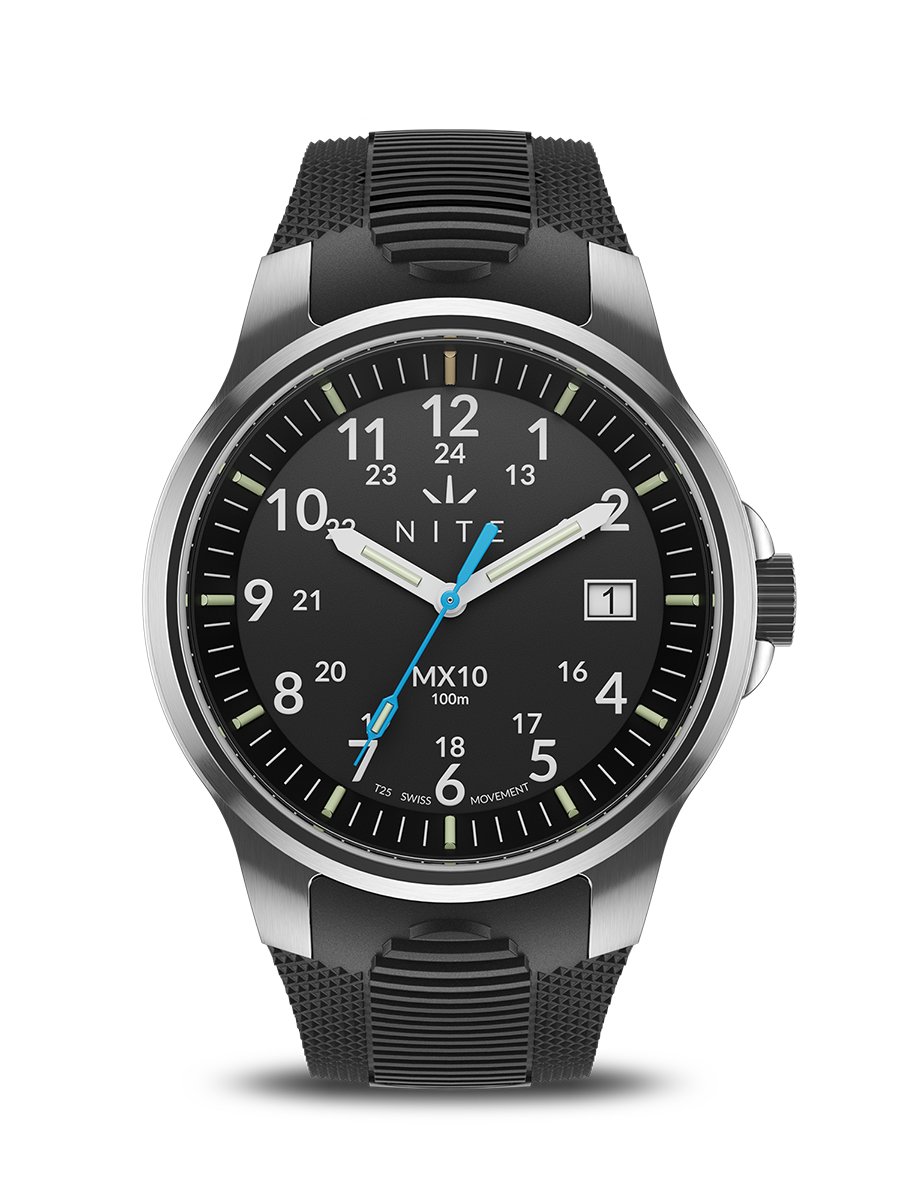
MX10 Shadow: fitted with T25 tritium, tuned for a low-signature glow rather than maximum brightness.
A Matte Case That Doesn't Flash in the Open
A polished watch case reflects light. A headtorch beam, a car interior light, low dawn sun, all catch on a shiny surface. In a stalking approach, an unexpected reflection off your own kit is a recognised problem, and a watch is no exception. Disappearing into the background is the job here, not looking sharp. No shine. No glow you can't control. Exactly what a watch for stalking is for.
We keep the MX10's case low profile, without a large polished bezel or crystal edge to catch stray light. Out here, a non-reflective watch isn't a fashion statement. It's a basic requirement, whether you're easing into a Highland corrie or settling into a ground blind at first light.
UK Shooting Season and the US Rut
The UK driven game season runs through the toughest months of the year. Persistent rain. Cold. Frost. Mud. Shifting wind, October through February for pheasant. For a game shooting watch, that's the whole job, day after day. Highland stalking runs longer again: summer midges, the autumn rut, winter conditions. Horizontal rain, peat and heather don't ask permission.
US deer seasons follow a similar shape. Their own rhythm, though. Archery opens first, often in September. Firearm season follows through autumn and into winter, exact dates set state by state. The rut is different again: bucks move most, hunters spend the longest hours in a stand. Usually falls in November across much of the whitetail's range. Cold, low light and long stationary sits, all landing at once.
100m water resistance with a properly sealed crown is a sensible minimum here. This is exactly what a shooting season watch earns its keep doing, whether that's a UK winter or a US November in the timber. For the fuller picture on what those ratings actually cover, our water resistance ratings guide breaks it down properly.
Mud, Ground Contact and Easy Cleaning
Field shooting means ground contact. Lying in cover for rough shooting. Sitting on a wet peg during a drive. Crawling into position on a stalk, climbing in and out of a stand, or dragging a deer back to the truck. Whichever wrist that is, it picks up mud and organic material.
A case and strap that clean up fast save you a proper irritation. Mud worked into strap holes and link joints is a small but real maintenance headache over a season. Rubber or webbing cleans quickly and copes with cold and wet without stiffening, which is more than you can say for leather in sustained field conditions. This is where a durable watch for hunters earns the label, not in a product photo.
Recoil and Movement Reliability
Shotgun recoil in driven shooting is moderate. But repetitive. A hundred to two hundred shots across a day isn't unusual. That's a low-force vibration running through the shooting hand's wrist for the whole session. Repetitive, not dramatic: a driven shooting watch has to shrug off every one of those hits without complaint.
Rifle recoil on a stalk, or a single well-placed shot from a stand, is a different shape entirely. Sharper. Far less frequent. What matters there is simpler: a quartz circuit and battery connection that holds together under one sharp hit, not sustained vibration.
We build the MX10 around a movement that copes with both, without accumulating timing error or physical damage. Steadier than a single dramatic impact on a building site. Just as real a demand, though.
Slings, Harnesses and Snag Points
Carrying a rifle on a sling, or wearing a shooting harness, puts steel swivels, bolt release handles and buckles in regular contact with your wrist. Same case-edge and strap-hardware contact you'd get from any harness work, or from a safety harness in a tree stand. Day after day, that kind of contact is exactly what a field sports watch has to survive.
Keep the hardware minimal here. Nothing oversized. Nothing deep-set to snag a swivel. Less to think about when you're bringing a rifle up quickly, or climbing down in the dark. It's a small detail, but it's the kind that matters most when your hands are already full.
Strap Choice for the Field
Rubber or webbing suits field use better than metal or leather here. A bracelet picks up mud in the links. Needs proper cleaning every time. Leather saturates in sustained wet conditions. Takes its time drying out. The last thing you want against your skin on a long, wet stalk or a cold sit.
Rubber and webbing cost you nothing in these conditions. Cope with cold. Don't stiffen up. Dry out fast enough to matter. Neither one needs a second thought once it's on your wrist. If you want to compare the options properly before deciding, our guide to webbing, rubber and steel straps for outdoor use covers the trade-offs in more depth.
The MX10 for Hunting and Shooting
Of our range, the MX10 fits this job best. The Alpha and Alpha Z are dive watches, built for a different task entirely. We built the MX10 as a field watch from the start. It shows.
T25 tritium for a low-signature glow. A 316L steel case rated to 100m. A Swiss Ronda 715 quartz movement, built to cope with driven-shooting recoil and sharper rifle impact alike. The crown is a push type, protected by crown guards against snagging. The case sits low and close to the wrist, not standing proud of it.
Battery life runs four to five years. The tritium itself never needs charging. If you're after the best watch for hunting, on either side of the Atlantic, this is where we'd point you first. For a broader look at field and adventure watches, our military and adventure watch buying guide is worth a read. You'll find the full range in the MX10 collection.

MX10 Jungle: 100m water resistance, push crown, no charging required.
FAQ
Is a tritium watch quiet enough for stalking? Yes. There's no alarm, no notification sound and no screen to activate, so there's nothing to alert deer or game beyond the watch simply being worn.
Does legal hunting time work the same in the US as the UK? Not exactly. The principle is similar, timing the day around sunrise and sunset, but the specific margin and rules vary by state in the US and by species in Scotland, so it's worth checking current local regulations before you head out.
Does a hunting watch need to work well from a tree stand or ground blind? Yes, arguably more than anywhere else. Long, still sits at close range are exactly where a silent, non-reflective, low-light watch matters most, since there's little room for a beep or a flash of screen to go unnoticed.
What water resistance do I need for a hunting or shooting watch? 100m is a sensible minimum for a full season, covering rain, mud and general wet weather rather than sustained submersion.
Will a tritium watch alert deer with light? No. Tritium illumination is a passive, continuous, low-intensity glow rather than a screen event, and it's visible to you looking at the dial rather than throwing light outward.
Does the MX10 need charging? No. The tritium illumination never needs charging, and the quartz movement runs on a battery that lasts four to five years before it needs replacing.
Is the MX10 tough enough for a full hunting season? Yes. Its 316L steel case, sapphire crystal and 100m water resistance are built to handle mud, rain and cold across a full season of field use.


